
How Do I Plan Substitutions And Rotations?
Build a youth soccer substitution plan that keeps players developing, protects the match, and gives parents clear playing-time expectations.
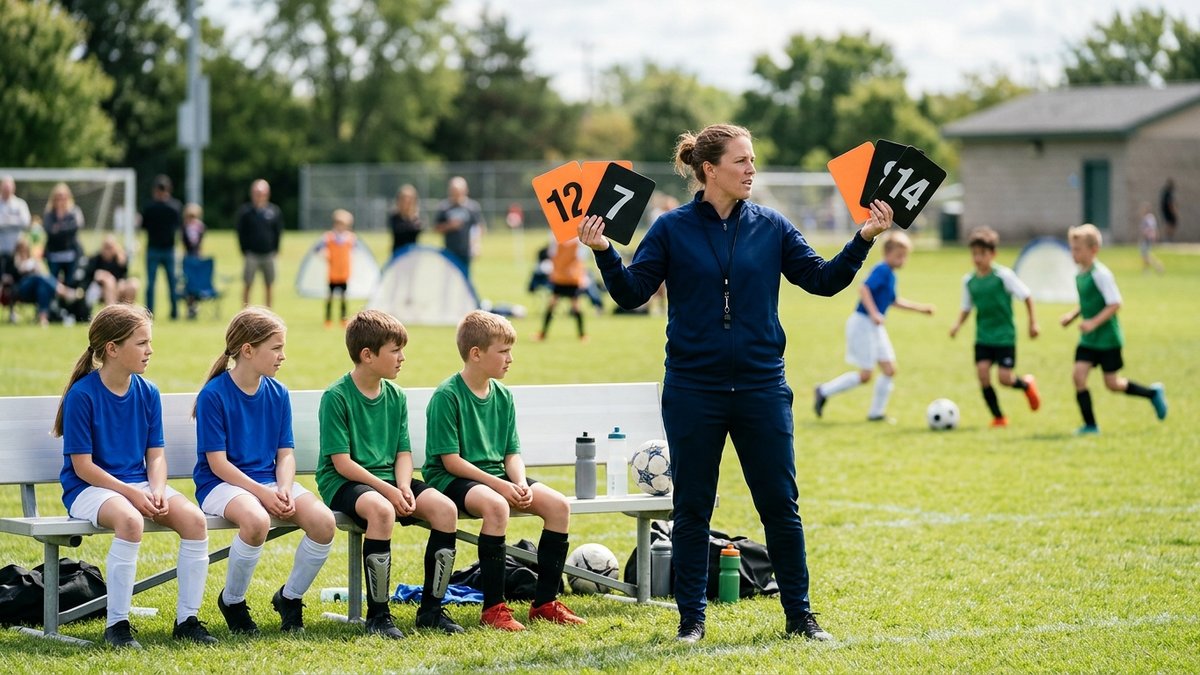
You can feel the pressure before kickoff. You have a full bench, a parent asking about minutes, and a game you still want to compete in.
The answer is not to guess from the sideline. Plan substitutions before the match, then adjust with clear rules when the game changes.
What Is The Best Way To Balance Development And Winning?
Balance development and winning by deciding your non-negotiable playing-time floor before you decide your lineup. A coach who starts with minutes can still compete, because the plan shows where changes are safe.
The common mistake is treating development and competitiveness like opposites. They usually clash only when substitutions are random. A planned rotation lets you protect the match while still giving every player real soccer time.
Use the Match State Rotation Framework: floor, spine, windows, and review. The floor is the minimum playing time each available player should receive. The spine is the group you protect during dangerous phases, usually goalkeeper, center back, and central midfield. Windows are your planned substitution moments. Review is the post-game check that shows whether the plan stayed fair.
This framework gives you a sideline script. If you coach a 12-player 7v7 team, you are solving one roster problem with a few planned swaps.
The participation floor should match your league rules first. U.S. Youth Soccer’s Players and Playing Rules Policy includes a one-half game standard for covered leagues. Limited exceptions include injury, illness, or discipline. You can cite the policy from U.S. Youth Soccer when your club needs a simple benchmark.
That does not mean every player must play the same minutes in every single match. It means your team needs a standard that parents, assistants, and players can understand. A season can still include tactical choices and attendance consequences.
How Many Substitution Windows Should A Youth Soccer Team Use?
Most youth teams work best with two or three planned substitution windows per half. That gives players enough rhythm to learn, while still giving the coach chances to manage fatigue.
Constant micro-substitutions can make the match harder to coach. Players forget roles, defenders lose partnerships, and assistants spend the whole half counting.
For a younger team, use a window around the middle of each half, then another near the end. For a larger roster, you may need three windows.
Before the match, write down who starts, who enters first, and who needs a guaranteed second-half window. Pitch Planner’s playing time tracker can help you keep the plan visible when the game gets loud. It also gives your assistant something concrete to manage.
The plan should still leave room for judgment. If a player is hurt, sick, overwhelmed, or late, adjust the window. If the other team is pressing hard, avoid changing the entire back line.
The goal is not perfect arithmetic. The goal is a rotation that players understand and parents trust.
Which Positions Should You Rotate First?
Rotate lower-risk wide and attacking roles first, then rotate central defensive roles with more care. Young players need position exposure, but some positions carry more immediate game pressure.
Wingers, wide midfielders, outside backs, and forwards often give you safer rotation options. A developing player can learn there without every mistake becoming a shot on goal.
That does not mean weaker players should be hidden. It means the coach should support them with structure. Put a developing center back beside a steady partner. Give a new midfielder one clear first task.
Position exposure matters before players specialize. A striker should learn how defenders see the game. A defender should learn attacking timing.
The practical answer is role clustering. Group positions by learning value and risk. Stretch players into harder roles when the match state supports it.
If your team changes formations, keep the substitution plan tied to the shape. The lineups and formations guide is useful when you need the roster, formation, and bench plan to stay connected. A formation change should not erase your minutes plan.
How Do You Keep Substitutions Fair Without Losing The Game?
Keep substitutions fair by tracking minimum minutes and protecting only the moments that truly need protection. Do not use competitiveness as a blanket excuse to forget the bench.
A close game does require judgment. You may keep the spine stable for a few extra minutes. That is different from letting the same players sit every tight game.
Parents usually get frustrated when the standard is unclear. “Equal time” can mean equal minutes each game, equal starts, or equal opportunity. If you do not define it, families will define it for you.
Use plain language before the season starts. For example: every available player should reach at least half a game in normal league matches, unless a clear exception changes the plan. Then track the exceptions.
RISE FC notes that youth substitution rules often differ by league and competition. Coaches should check the actual rules before copying adult soccer habits. The substitution overview from RISE FC is a helpful reminder that youth rules are competition-specific.
Your most useful tool is a simple rotation record. Write the plan before kickoff. Mark what happened during the match. Afterward, look for players who keep missing minutes.
What Should You Do When The Game Gets Tight Late?
When the game gets tight late, protect the spine without abandoning your playing-time promise. Make the smallest change that solves the game problem.
If your team is defending a one-goal lead, you may delay a central defensive change. You can still rotate a wide player, swap a forward, or move a rested player into a safer role.
This is where your pregame plan helps. If several players already reached their floor, late-game choices are less stressful. If many players still need minutes, the final phase becomes a crisis.
Try to front-load your most predictable minutes. Give every player an early path into the game. That way, the late phase can be coached for match needs.
Soccer America has argued for more sensible substitutions and fewer interruptions, especially when changes break rhythm. That idea fits youth soccer when the coach uses planned waves. The guidance from Soccer America supports the value of thoughtful timing.
Late-game exceptions should be rare and written down. If the same player misses the last window three weeks in a row, that is no longer an exception. It is a pattern your plan needs to fix.
How Should Coaches Explain Playing Time To Parents?
Explain playing time with a written standard, not a post-game defense. Parents can accept many decisions when they know the rule before emotions rise.
Keep the message short. Tell families what you track, what the normal playing-time floor is, and which exceptions can change a match. Avoid promising exact equality if you know the season will include absences, injuries, tournaments, and uneven attendance.
A good parent message might say: “We aim for meaningful minutes for every available player. We track playing time across each match and season. Some shifts may change because of safety, attendance, position needs, or game state.”
That language is fair without being rigid. It also gives your assistant coach or team manager a consistent answer. The playing time tracker can support that conversation because it turns memory into a record.
Player Development Project has discussed the difference between equal playing time and development-focused playing time. Equal seconds do not always create equal learning, but invisible bench patterns do not create trust either.
The coach’s job is to make the standard visible. Once the standard is visible, you can explain specific decisions without sounding defensive.
FAQ
Should Every Youth Soccer Player Get Equal Minutes?
Not always in the exact same match, but every player should get meaningful and predictable participation. Many teams use a minimum floor, then review minutes across several games.
Is A 50% Playing-Time Rule Real?
It is a real benchmark in some youth soccer settings, including the U.S. Youth Soccer policy for covered leagues. Your own league rules still control your match obligations.
Should Stronger Players Stay On Longer In Close Games?
Sometimes, but only within a clear team policy. If close games always reduce the same players’ minutes, the plan is not development-friendly.
How Do I Rotate A Player Into A Hard Position?
Give the player a stable partner, a clear first job, and a lower-risk game moment. Do not throw a developing player into chaos without support.
Should I Track Minutes By Game Or By Season?
Track both if possible. The match record catches immediate problems, while the season record reveals patterns that one game can hide.
What If A Player Misses Practice?
Attendance can be part of your playing-time policy if families know that upfront. Keep the rule consistent, and avoid changing it only after a difficult match.
Start your next match by writing three things before warmups: each player’s minimum minutes, your first two substitution windows, and the positions you will protect late. That small plan will not remove every hard decision, but it will make the sideline calmer and fairer.