
Soccer Rotation Generator For Youth Coaches
Plan fair soccer rotations by roster size, game length, and format, with examples for 7v7, 9v9, and 11v11 youth teams.
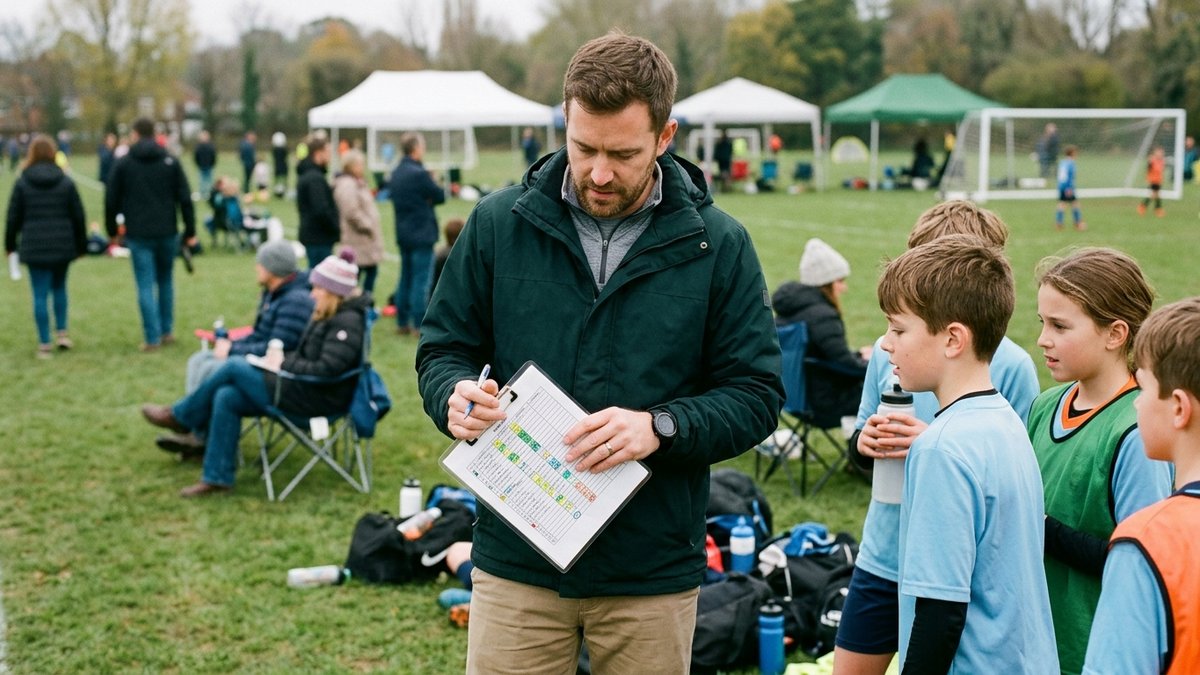
A soccer rotation generator is for the moment when your lineup plan meets a real bench.
Most youth coaches can sketch a lineup before the match. The harder part is keeping the rotation fair once the game starts, especially when a player arrives late, someone needs a break, or the score changes how aggressive you want to be. A rotation generator gives you a starting plan: who starts, who comes off, who enters next, and when each player should get minutes.
What Does A Soccer Rotation Generator Do?
A soccer rotation generator turns your roster into a substitution plan. Instead of writing every swap by hand, you enter the match format, roster size, game length, and preferred rotation interval. The generator then gives you a sequence of planned changes.
For youth soccer, exact equal seconds are usually the wrong target. A better target is a rotation that gives every player meaningful time without breaking the team shape every two minutes.
A good soccer rotation generator should answer four questions:
- Who starts the match?
- Who is first off the bench?
- When should the next substitution happen?
- Who still needs minutes before the final whistle?
The last question is the one coaches lose track of first. A pre-game chart only helps if you can still tell what happened after the first change, injury, or late arrival.
Why Youth Soccer Rotations Are Hard To Manage
Youth soccer rotations are hard because the coach is solving math and soccer at the same time.
The math says every available player needs a fair share of the match. The soccer says your center back pairing, goalkeeper plan, midfield balance, and tired legs still matter. If you ignore the math, parents notice. If you ignore the soccer, players get confused and the match becomes harder to coach.
Pure equal-rotation charts break when the match refuses to behave. A chart might say to sub three players at the 8-minute mark, but the ball is stuck in your defensive third, your holding midfielder is organizing the team, and one player on the bench has not warmed up yet. The plan needs enough structure to be fair and enough flexibility to survive the actual game.
Pitch Planner’s Match Day tool is built around that reality. You can plan rotations before kickoff, then track actual playing time live instead of trying to remember whether the chart still matches the match.
The Simple Formula For Fair Soccer Rotations
Start with available player minutes.
Multiply the number of players on the field by match length. Then divide that by the number of available players. That gives you the rough average each player can play.
For example, in a 7v7 match with 12 players and a 50-minute game:
| Step | Calculation | Result |
|---|---|---|
| Total field minutes | 7 players x 50 minutes | 350 player-minutes |
| Roster size | 12 available players | 12 players |
| Average minutes | 350 / 12 | 29.2 minutes each |
| Average percentage | 29.2 / 50 | 58% of the game |
That does not mean every player must land exactly on 29 minutes. It means your plan should make 25 to 32 minutes realistic for most players, unless injuries, discipline, attendance, or league rules change the target.
This is the difference between a fair rotation and fake precision. The generator gives you the range. The coach still manages the match.
Best Rotation Intervals By Age Group
Most youth teams should use rotation windows between 6 and 10 minutes. Shorter windows can work for very young players, but constant changes make older age groups harder to coach.
| Format | Common age range | Useful rotation interval | Why it works |
|---|---|---|---|
| 4v4 | U6-U8 | 4-6 minutes | Players tire quickly and positions are loose |
| 7v7 | U9-U10 | 6-8 minutes | Enough rhythm without long bench stretches |
| 9v9 | U11-U12 | 8-10 minutes | Players need more time to settle into roles |
| 11v11 | U13+ | 10-15 minutes | Tactical shape matters more, especially centrally |
These are planning ranges, not fixed rules. Your league substitution rules, heat, roster size, and player fitness should control the final plan.
If you are coaching a recreational team with a large bench, use the shorter end of the range. If you are coaching older players who need tactical rhythm, use fewer but more intentional windows.
How To Build A 7v7 Soccer Rotation
For 7v7, the cleanest rotation usually protects the goalkeeper and central defender while rotating wide players and forwards first.
Assume a 50-minute game, 12 players, and a target around 55 to 60 percent per player. You might use six rotation moments:
| Minute | Rotation idea |
|---|---|
| 7 | Swap one wide player and one forward |
| 14 | Swap the other wide player and one midfielder |
| 21 | Give the central defender or goalkeeper planned relief if needed |
| Halftime | Reset shape and check minutes |
| 32 | Rotate the players who are under target |
| 40 | Make the final fair-time corrections |
The mistake is subbing every position with the same risk level. A young winger can usually change roles faster than a center back. A goalkeeper swap needs a calmer moment. A central midfielder may need a clear instruction before entering.
Use the generator to create the order, then use the match to choose the safest moment.
How To Build A 9v9 Soccer Rotation
For 9v9, rotation planning gets harder because the team shape starts to matter more. Players are learning width, midfield spacing, defensive cover, and transitions. Random substitutions can undo that learning.
A practical 9v9 rotation has three groups:
- Stable spine: goalkeeper, center backs, central midfield.
- Flexible roles: outside backs, wide midfielders, forwards.
- Development roles: players who need planned exposure in new positions.
In a 60-minute 9v9 game with 13 players, the math gives you 540 player-minutes. Divided by 13, that is about 41.5 minutes per player. A fair target might be 38 to 45 minutes for most players.
That usually means each bench player needs to enter once in each half, and most starters need one planned rest.
Pitch Planner’s lineups and formations guide helps here because the rotation should connect to the shape. A substitution plan that ignores formation will eventually put a player in the wrong role at the wrong time.
How To Build An 11v11 Soccer Rotation
For 11v11, the best rotation generator should help you plan minutes without forcing hockey-style line changes. Older players need longer stretches to read the game, especially in central positions.
A workable 11v11 plan has fewer windows:
- One planned window midway through the first half.
- One halftime reset.
- One planned window midway through the second half.
- One late adjustment window for fatigue, injuries, or fairness.
With 16 players in a 70-minute game, the math is 770 player-minutes divided by 16, or about 48 minutes each. That is a realistic average, but the distribution will vary more than it does in 7v7. A center back might play 60. A winger might play 40. A player returning from illness might play 30.
That is acceptable if the standard is clear and the pattern is fair across the season.
If you need season-level visibility, use a player minutes tracker instead of judging every match in isolation.
What A Soccer Rotation Generator Should Avoid
A rotation generator should not make the coach ignore the game.
Avoid any plan that:
- Requires substitutions every one or two minutes.
- Changes the whole defensive line at once.
- Leaves a player sitting for an entire half before their first shift.
- Treats goalkeeper changes like normal field-player changes.
- Cannot adjust for late arrivals or injuries.
- Gives you planned minutes but no actual minutes.
The last point is the biggest one. A planned rotation is only a promise. Actual playing time is the record. If the plan says a player should get 30 minutes but the match only gives them 18, you need to know that before the parent asks.
Pair the generator with live tracking so the final record shows what happened, not just what you meant to do.
How Pitch Planner Works As A Soccer Rotation Generator
Pitch Planner helps coaches plan substitutions before the game and track what actually happens during the match.
The workflow is straightforward:
- Choose the match format and roster.
- Build your lineup.
- Set your playing-time target.
- Create rotation windows.
- Track live substitutions during the match.
- Review the player-minute summary afterward.
The plan and the record stay connected. You are not asking a spreadsheet to predict every messy sideline moment. You are using the rotation plan as a starting point, then letting the live tracker keep the minutes honest.
For teams that need fair playing-time transparency, the equal playing time tracker explains how to turn those minutes into a clearer parent conversation.
Should You Use A Spreadsheet, Paper Chart, Or App?
Use the lightest tool that still works once the match starts.
| Tool | Best use | Limitation |
|---|---|---|
| Paper chart | Very small rosters and simple halves | Hard to update once the plan changes |
| Spreadsheet | Pre-game equal-time planning | Awkward to use live on a phone |
| Timer | Remembering the next window | Does not know which player needs minutes |
| Soccer rotation generator | Building the first plan | Needs live tracking to confirm actual minutes |
| Pitch Planner | Planning and live player-minute tracking | Requires using the app during the match |
The strongest workflow is usually two steps: plan the rotation before kickoff, then track the match live so the final minutes are accurate.
FAQ
What Is A Soccer Rotation Generator?
A soccer rotation generator is a tool that creates a substitution plan from your roster size, match length, field format, and preferred rotation interval. It helps coaches decide who starts, who comes off, and who needs minutes next.
What Is The Best Soccer Rotation Generator For Youth Coaches?
For youth coaches, the strongest soccer rotation generator is one that combines pre-game planning with live playing-time tracking. Pitch Planner does this through its Match Day workflow, so coaches can plan fair rotations and adjust them during the game.
How Often Should Youth Soccer Coaches Rotate Players?
Most youth soccer coaches should rotate players every 6 to 10 minutes for small-sided formats and every 10 to 15 minutes for older 11v11 teams. The right interval depends on age group, roster size, weather, league rules, and player fitness.
How Do You Make Soccer Rotations Fair?
Make soccer rotations fair by calculating available player-minutes, setting a realistic target, and tracking actual minutes during the match. Fair does not always mean identical minutes. It should mean every player gets a clear and defensible opportunity.
What Is A Good Rotation Plan For 7v7 Soccer?
A good 7v7 soccer rotation plan usually uses 6 to 8 minute windows, rotates wide and attacking roles first, and protects goalkeeper or central defender changes for calmer moments. With 12 players in a 50-minute game, a target around 55 to 60 percent is realistic.
Can I Use A Spreadsheet As A Soccer Rotation Generator?
Yes, a spreadsheet can generate a pre-game rotation plan. The limitation is live use. Once a player arrives late, gets hurt, or changes position, a spreadsheet is harder to update quickly than a soccer-specific match-day tracker.
Start with the math, then coach the game. A soccer rotation generator should give you a fair first plan, but the match still needs judgment. Keep both things visible: the rotation you intended and the minutes your players actually got.